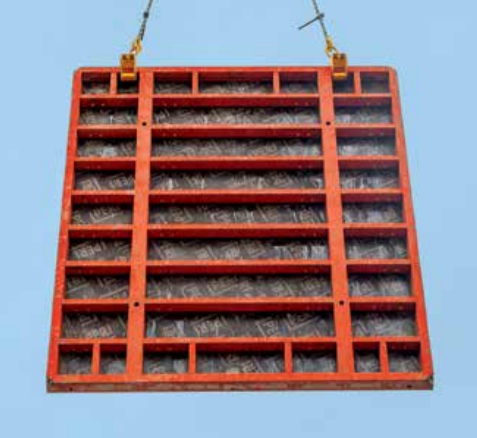
Peri Trio Panel Formwork
TRIO PANEL FORMWORK
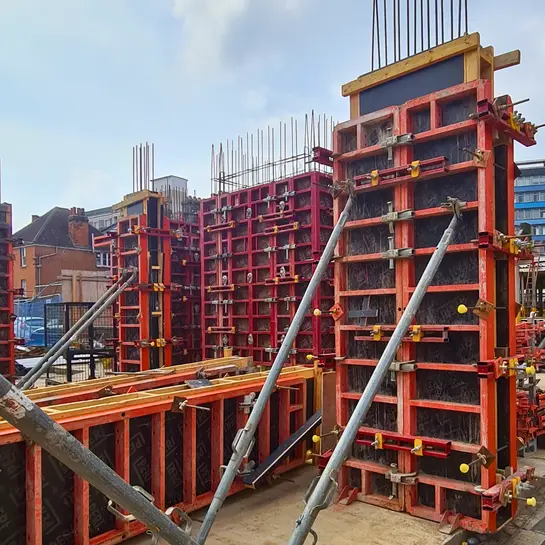
TRIO PANEL FORMWORK
The proven, universal panel formwork for walls and columns with only one connecting part
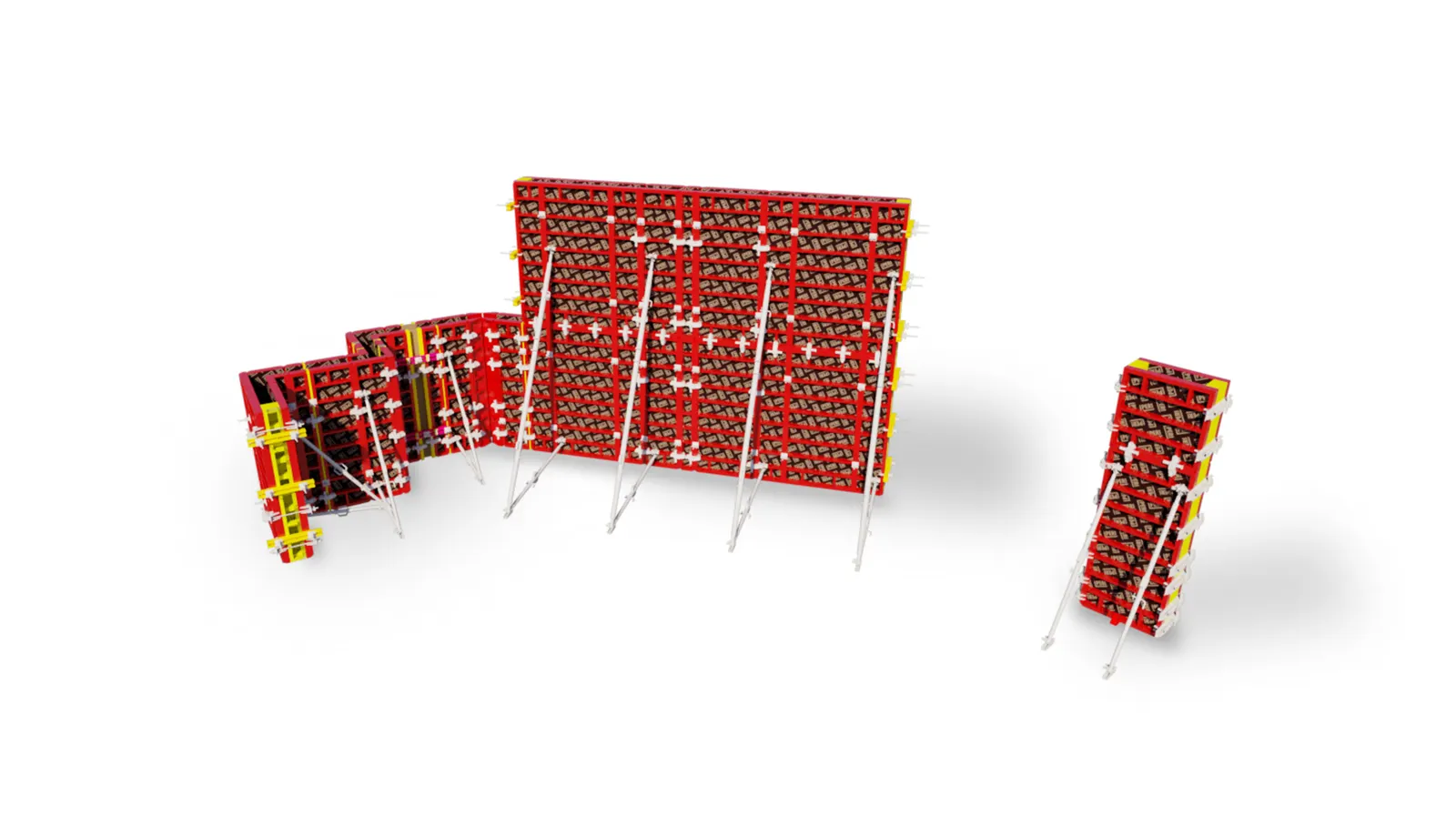
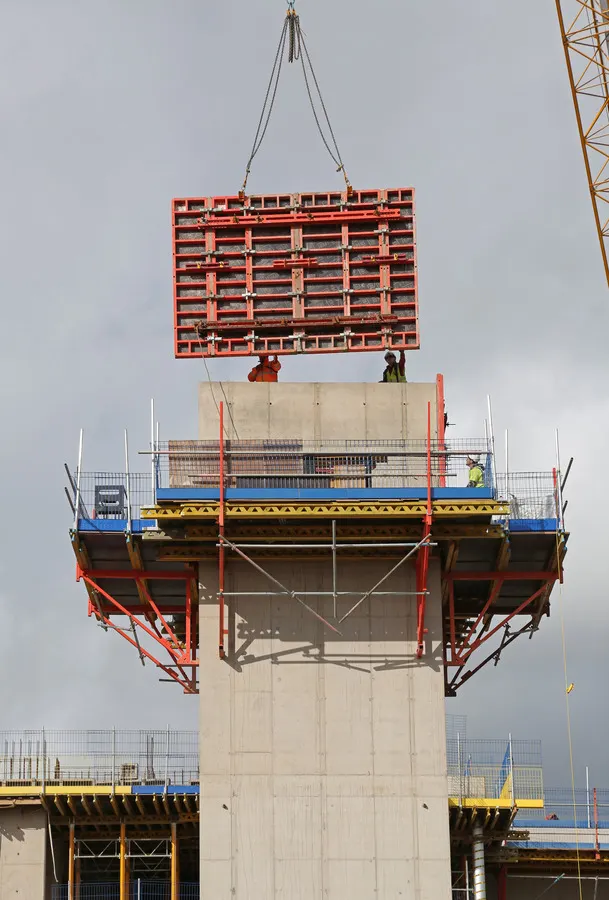
Experience the proven advantages of TRIO formwork when forming columns in addition to walls. With standard panel sizes, columns of various dimensions and heights of up to 3.9m can be constructed.
INFORMATION
BRAND
Peri
PRODUCT TYPE
Panel Formwork
CONSTRUCTED
Heights of up to 3.9m can be constructed
HIGH UTILISATION
Use the same panels for walls and columns.
FRESH CONCRETE PRESSURE
80 kN/m²
PRODUCTION
Made in United Kingdom
EASY AND SIMPLE CONNECTIONS
Connect all panels with ease using the BFD coupler
SHUTTERING TIMES
The focus of the universal TRIO Wall Formwork is on ensuring simple shuttering procedures and reduced shuttering times. Standard panels have only 6 different widths which allow easy handling and efficient logistics. With the BFD Coupler for all connections and many other practical system solutions, TRIO has successfully proven itself in countless projects worldwide.
SCAFFOLDING GRID
Metric
SYSTEM TYPE
Panel Formwork
MATERIAL
- Steel
- Aluminium
STOPEND FORMWORK
Stopend formwork and height offsets
TRIO ALUMINIUM
Lightweight formwork for crane-independent working; easily distinguishable by its yellow powder coating
EXCLUSIVE USE
Peri products have been designed for exclusive use in the industrial and commercial sectors by qualified personnel only
CONNECTIONS
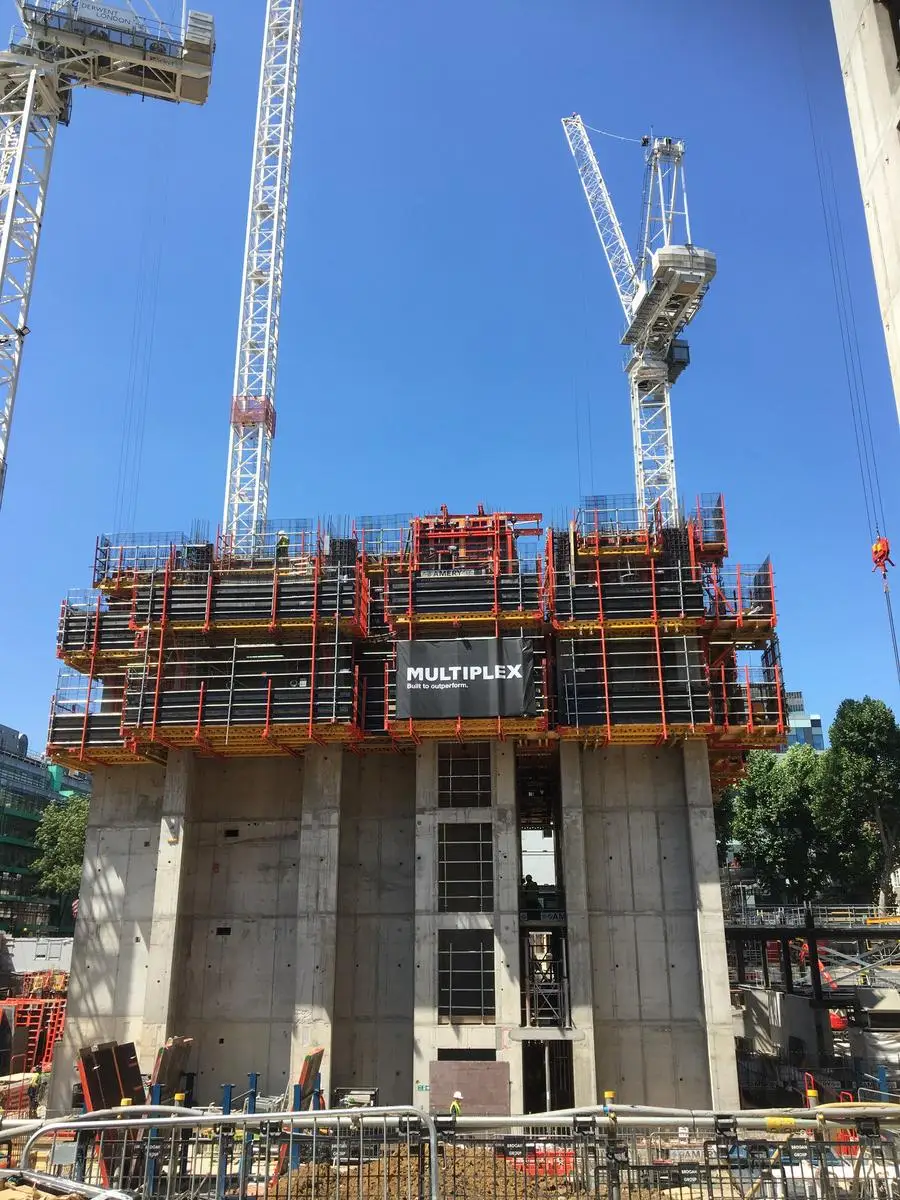
Trio only requires a few panel widths. Only one part is required for all panel connections, the alignment couplerbfd. This allows compensations up to 10 cm and height extensions up to 5.40 m without any additional bracing.
APPLICATION
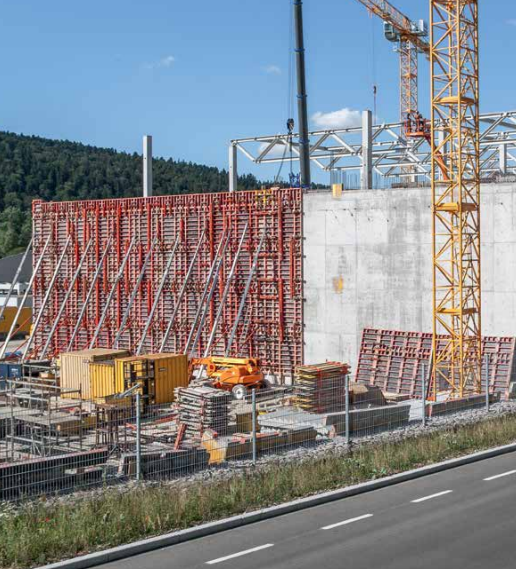
The standard configuration includes formwork for vertical walls up to 8.10 m high and wall thicknesses from 18 to 40 cm including Push-Pull Props and safety equipment.
LOAD
Tensile and compressive force: (fresh concrete pressure according to DIN 18218 - evenness according to DIN 18202) | 67.5 kN/m² - line 7 (hydrostatic pressure) | 56.0 kN/m² - line 7 (constant pressure) | 81.0 kN/m² - line 6 (constant pressure)
TRIO STRUCTURE
Trio panels with a free choice of formlining for special concrete surface requirements – supplied already pre-assembled
TRIO SHAFT ELEMENT
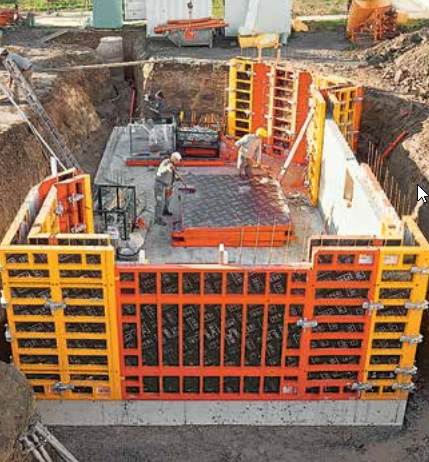
With the TRIO shaft element, complete shaft internal formwork can be moved quickly; the all-round striking clearance is 30 mm.
MXK BRACKET SYSTEM
The MXK Bracket System serves as a working platform on MAXIMO and TRIO. The modular design and lightweight, manually-assembled system components ensure fast installation and a high level of costeffectiveness. In contrast to conventional solutions, the modular system provides pre-assembled individual components, e.g. the MXK Scaffold Deck or PROKIT PMB Side Mesh Barrier.
INSTRUCTIONS ON USE
The use in a way not intended, deviating from the standard configuration or the intended use according to the Instructions for Assembly and Use, represents a misapplication with a potential safety risk, e.g. risk of falling.
ANTI-CORROSION AND SURFACE COATING
High level of corrosion protection thanks for galvanizing on the inside of the panel, with powder coating on the outside face
ACCESSORIES
Accessories such as concreting plattforms and a complete platform system provide safe working conditions. Components made of steel are coloured red – aluminium components are yellow powder-coated.
SYSTEM'S COST-EFFECTIVENESS
TRIO is very versatile and efficient in its use - from residential construction and multi-storey structures to applications in infrastructure projects. This ensures a high degree of utilisation and thus the system's cost-effectiveness. Variants of the panel formwork, e.g. the aluminum version or for special surfaces, expands the range of applications. The closed panel profiles of the TRIO provide high torsional stability. The excellent product quality guarantees a long service life. For all applications, TRIO fulfils the highest requirements regarding evenness.
CARE & MAINTENANCE
CARE & MAINTENANCE INSTRUCTIONS
In order to maintain the value and operational readiness of the formwork materials over the long term, clean the panels after each use. Some repair work may also be inevitable due to the tough working conditions. The following points should help to keep cleaning and maintenance costs as low as possible.
Spray the formwork on both sides with concrete release agent before each use; this allows easier and faster cleaning of the formwork. Spray the concrete release agent very thinly and evenly!
Spray the rear side of the formwork with water immediately after concreting; this avoids any time-consuming and costly cleaning operations.
When used continuously, spray the panel formlining with concrete release agent immediately after striking; then clean by means of a scraper, brush or rubber lip scraper. Important: do not clean formlining made of plywood with high-pressure equipment; this could result in the formlining being damaged.
Fix box-outs and mounting parts with double-headed nails; as a result, the nails can easily be removed later, and damage to the formlining is largely avoided.
Close all unused anchor holes with plugs; this eliminates any subsequent cleaning or repair work. Anchor holes accidentally blocked with concrete are freed by means of a steel pin from the formlining side
When placing bundles of reinforcement bars or other heavy objects on horizontally-stored formwork elements, suitable support, e.g. square timbers, is to be used; as a result, impressions and damage to the formlining are largely avoided.
Internal concrete vibrators should be fitted with rubber caps if possible; as a result, any damage to the formlining is reduced if the vibrator is accidently “inserted” between the reinforcement and formlining.
Never clean powder-coated components, e.g. panels and accessories, with a steel brush or hard metal scraper; this ensures that the powder-coating remains intact.
Use spacers for reinforcement with large-sized supports or extensive areas of support; this largely avoids impressions being formed in the formlining when under load.
Mechanical components, e.g. spindles or gear mechanisms, must be cleaned of dirt or concrete residue before and after use, and then greased with a suitable lubricant. Provide suitable support for the components during cleaning so that no unintentional change in their position is possible. Do not clean components suspended on a crane.