
Kimia Extradosal Reinforcement Of Floors By Casting Of Pourable Fibre
EXTRADOSAL REINFORCEMENT OF FLOORS BY CASTING OF POURABLE FIBRE
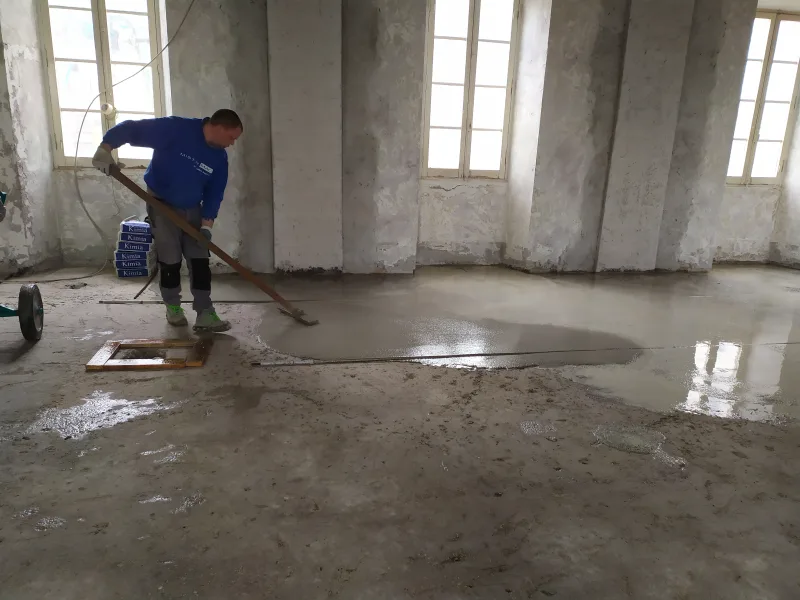
EXTRADOSAL REINFORCEMENT OF FLOORS BY CASTING OF POURABLE FIBRE-REINFORCED CONCRETE
The restoration and consolidation of horizontal elements, such as floors, in small thicknesses is possible thanks to the application of cementitious concretes, fiber-reinforced with micro-armour of metal fibers, with a pourable consistency.
INFORMATION
BRAND
Kimia
PRODUCT TYPE
Reinforced Concrete
FEATURES
- Excellent grip
- Ductile behaviour
METAL FIBERS
Fiber-reinforced with micro-armour of metal fibers, with a pourable consistency.
PREPARAZIONE DELLA SUPERFICIE
Removal of the present pavement and improved concrete in order to obtain a solid support, free of loose parts and sufficiently rough. Assicurarsi che la surface sia pulita ed estente da polvere, grasso, olio ed agenti distaccanti in genere.
MATERIAL
Cement
HIGH MECHANICAL RESISTANCE
High mechanical resistance of compression and flexure
EXECUTION OF THE JET
Wet the area to be treated to saturation. Prepare the BETONFIX HCR EVO product by mixing it with sufficient water and the appropriate steel fiber, then apply the cloth.
OPERATIONAL PHASES
- Casting
- Surface preparation
- Treatment of reinforcing bars
- Application of anti-evaporator
- Insertion of pegs and connectors
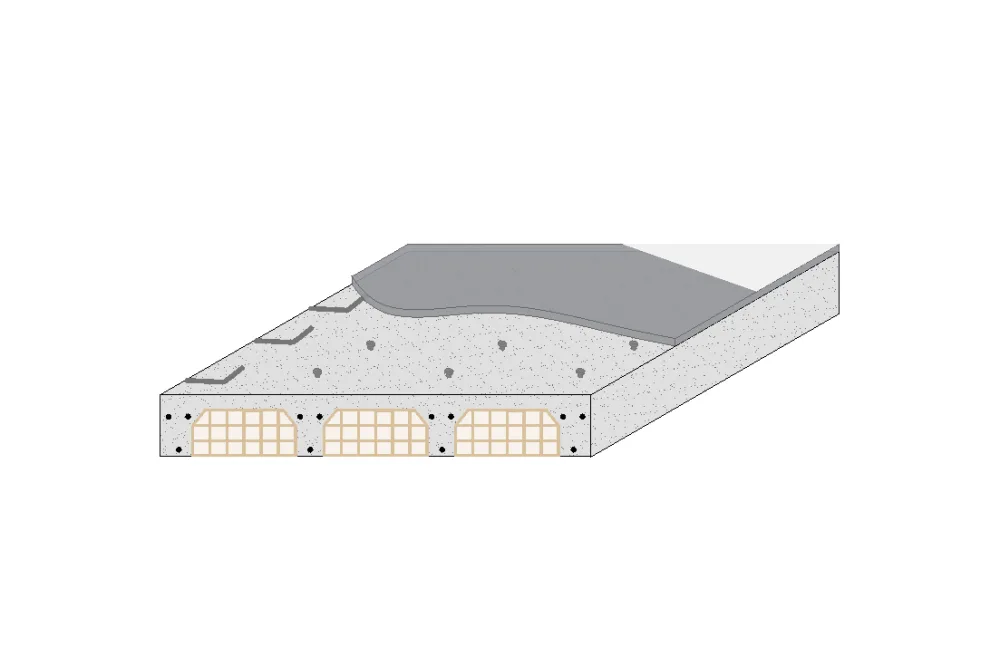
DETAIL
Before carrying out the casting, it is advisable to evaluate the possibility of inserting pegs to ensure a collaborative connection of the system with the existing floor and metal connectors for the connection with the perimeter structures. We proceed by preparing guides, in wood or metal, as high as the thickness planned for the reinforcement, in order to help the operator in the phases of stapling the material.
PRODUCTION
Made in Italy
DOWNLOADS
↓ Application Sheet
↓ Construction Detail
EXECUTION OF THE GHETTO
Bagnare a saturazione la zone da trattare. Prepare the BETONFIX HCR EVO/TX product by mixing it with sufficient water and the appropriate metallic fiber, then apply the concrete and stretch it with a stand. È consigliabile effettare un passaggio sul prodotto fresh with a frangibolle roll of suitable thickness, to eliminate eventual air pockets.
APPLICATION OF ANTI
Prevedere sul betoncino still fresh application a rollo or a spray of Antievaporante W employed for the protection of fresh concrete from the rapid evaporation of water.
NETWORK STATUS AND WEALTH INFORMATION
Eventuale positioning of the collaborating electrowelded network and the perimetral metallic connectors opportunely mixed with resin or mortar of the KIMITECH or BETONFIX line. Bagnare a saturazione la zone da trattare. Prepare the BETONFIX CR product by mixing it with sufficient water, then apply the grout.
Eventuale inserimento di Poli per garanteer un elligaamento meccanico collaborante del sistema con laio existente e di connettori metallici per il linkaggio alle structure perimetrali. The poles must be fixed to the potential elements of the sun, while the perimeter connectors must be opportunely coated with resin or mortar from the KIMITECH or BETONFIX line.
APPLICATION
PROTECTIVE TREATMENT OF THE REINFORCEMENT BARS
Carry out the protective treatment of exposed reinforcement bars by applying single-component anticorrosive hydraulic mortar Betonfix KIMIFER, with a CE mark in conformity with UNI EN 1504-7, applied with a brush, according to the consumption rates in the Technical Data Sheet, on the metal reinforcement to be protected.
PREPARATION OF THE SURFACE
Removal of the present flooring and careful removal of the degraded and inconsistent concrete by mechanical scarification to guarantee a rough surface, and free of incoherent parts. Make sure the surface is clean and free from dust, grease, oil and release agents in general.
TREATMENT OF EXISTING METAL REINFORCEMENT
Perform the brushing of exposed reinforcing bars or proceed with hydro-sandblasting in order to remove the rust and bring the surface to “white-metal” condition (hydro-sandblasting is not necessary if the preparation of the surface has been carried out by hydro-scarification, but it is necessary when a long period of time elapses from this operation due to particular organizational requirements of
INSERTION OF RODS AND CONNECTORS
Decide if there is the for inserting rods to ensure a collaborative connection of the system with the existing floor and metal connectors to guarantee the connection to the perimeter structures. The rods, if necessary, must be fixed, beforehand to the casting, to the load-bearing elements of the floor (joists, etc.). The perimeter metal connectors must be grouted with suitable resins of the Kimitech line or cementitious grouts of the Betonfix line. Prepare guides (in wood or metal), as high as the thickness that has been provided for reinforcement, to help the operator during the material spreading.
APPLICATION OF ANTI-EVAPORATOR
Apply anti-evaporator ANTIEVAPORANTE W on the fresh concrete, using a roller or spray. This forms a film that protects the concrete by preventing the evaporation of the mixing water in the first phases of curing of the product.
WATERPROOFING
Soak the mesh by applying, with a trowel, mortar Betonfix 300, mixed with 35% by weight of Kimitech ELASTOFIX with a mortar consumption of about 1,5 kg/m². In order to prepare the mixture, stir the product for about 5 minutes with a cement mixer or, in case of small quantities, with drill and whisk. Add 3/4 of Kimitech ELASTOFIX and then, gradually, the remaining product until you get the right consistency. Once obtained a homogeneous mixture free of lumps, make it rest for 10 minutes.
Once the first layer has cured, not before 24 hours have passed, apply with a trowel a second layer of mortar Betonfix 300 mixed with 35% by weight of Kimitech ELASTOFIX with a mortar consumption of about 2 kg/m². In order to allow the correct curing of the mortar, in the case of procedures inside closed tanks, it is essential to ensure adequate forced ventilation (if the structure has 2 openings quite far from each other, typically, we suggest that you place a suction pipe at an opening, letting the air enter the other side. If there is only one opening, the suction pipe is placed into the tank, leaving the suction nozzle at the bottom of it, on the opposite side of the opening).