
Kimia Intradosal Reinforcement Of Floors With Diffused Frcm
BETONFIX CR MORTARS
BETONFIX CR MORTARS
Reinforcements with composite systems
INFORMATION
BRAND
Kimia
PRODUCT TYPE
Mortars
CHARACTERISTICS
High mechanical characteristics
INSTALLATION
Quick application and installation
FINISH
Apply any necessary plastering and protective finishing coats using a suitable mortar from the BASIC or BETONFIX range.
MATERIAL
Cement
LOW THICKNESS
Low thickness and weight
APPLICATION OF SECOND COAT OF MORTAR
Apply a second coat of BASIC MALTA M15/F natural hydraulic lime mortar to completely cover the fabric.
OPERATIONAL PHASES
- Smoothing
- Installation of the network
- Preparation of the substrate
- Application of a first layer of mortar
- Preparation of the connection systems
- Application of the second layer of mortar
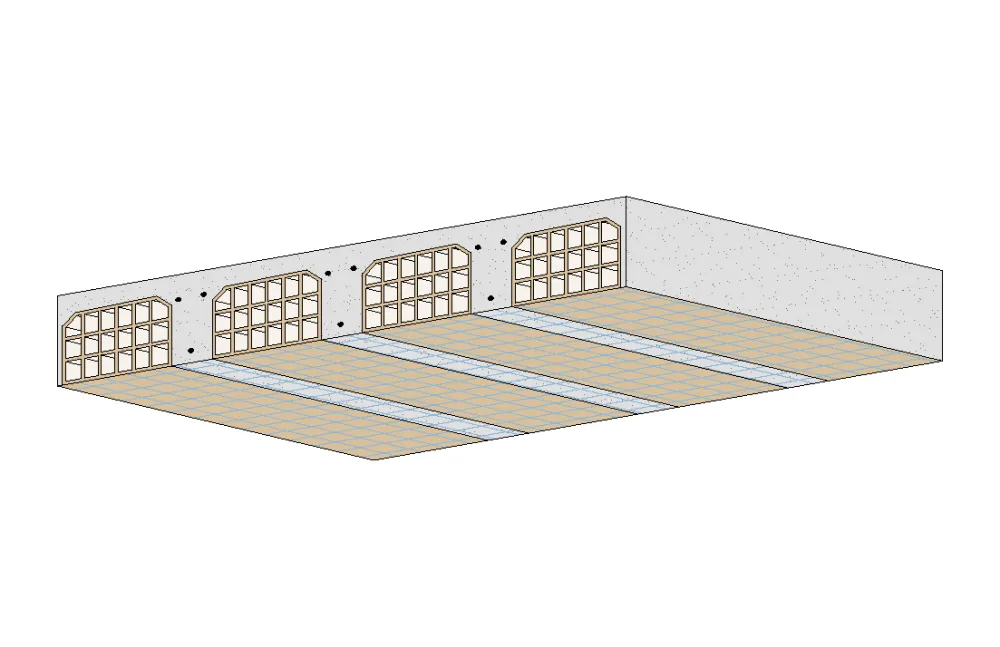
REINFORCEMENT THICKNESS
The subsequent covering with mortar must also have a thickness of 5 mm, thus respecting an overall reinforcement thickness of 1 cm.
NATURAL HYDRAULIC
Natural hydraulic lime mortar
LAYER
Embedded mesh within layer
FIRST COAT OF MORTAR APPLICATION
Apply a first coat of BASIC MALTA M15/F natural hydraulic lime mortar to create a layer in which to embed the mesh.
DETAIL
Flexural reinforcement of a floor slab can be achieved by applying FRCM systems to the intrados, consisting of basalt fibre mesh and natural hydraulic lime mortar: the intervention consists of preparing the support and applying a first layer of roughcast to the wall facing with 5 mm thick natural hydraulic lime mortar, in which the basalt fibre reinforcement mesh is partially embedded.
PRODUCTION
Made in Italy
DOWNLOADS
↓ Technical Sheet
↓ Construction Detail
PRIMING
Wet the surface to be reinforced until saturated. Alternatively, if wetting is not possible, apply KIMICOVER FIX, a two-component, water-based synthetic resin primer.
APPLICATION OF REINFORCEMENT FABRICS
Place the KIMITECH BS ST basalt fiber mesh on the still-wet BASIC MALTA M15/F mortar. Press the mesh into the mortar layer until it is completely embedded. Ensure the strips overlap by at least 20 cm to ensure mechanical continuity of the reinforcement.
SUBSTRATE PREPARATION
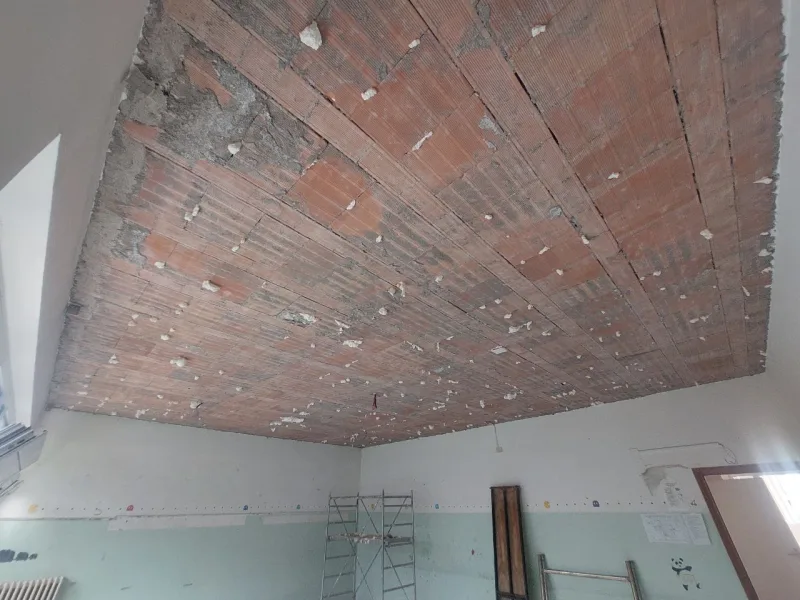
Remove any loose plaster and, if necessary, repair the reinforced concrete elements: remove rust from exposed rebar, treat the rebar, and repair the elements with suitable mortars from the BETONFIX range.
APPLICATION
SKIMMING
Skimming should be carried out upon completion of the plaster curing (wait at least 1 week for each centimeter of thickness, and at least at least 3 weeks) by applying a ready-to-use natural hydraulic lime-based white skimming mortar Limepor EDO.
APPLICATION OF AN INCORPORATING LAYER
Covering with a second layer of lime based mortar Basic MALTA M15/F, respecting the maximum overall thickness of the reinforcement of 1 cm.
APPLICATION OF THE REINFORCEMENT
Apply a first rough coat (5 mm) of lime-based mortar Basic MALTA M15/F to the masonry. While the mortar is still fresh, apply de reinforcing baslt-based mesh Kimitech BS ST 200 (for cutting the mesh at the openings use shears and/or construction cutters or angle grinder). Overlap the mesh bands for about 15 - 20 cm in order to guarantee mechanical continuity.
PREPARATION OF THE SUBSTRATE
Demolition of existing plaster and loose parts and scarification of bed joints. Washing and wetting of the soaked surface (minimum masonry humidity equal to 70%). Possible reconstruction of missing or particularly damaged masonry parts. If restoration of the support is needed, such intervention will be performed using mortars from Basic, Tectoria or Limepor range. The thickness necessary to restore the support is not included in the total thickness of FRCM reinforcing system.
DRILLING HOLES FOR CONNECTIONS
Creation of a hole with a minimum diameter of 20 mm and its thorough cleaning with compressed air; insertion of the connector made with the Kimisteel GLV 650 galvanized steel fabric, rolled longitudinally on itself so as to form a sort of rod with improved adhesion and appropriately bent with a Kimisteel BENDER bender or other suitable equipment (in the event that the use of the Kimisteel IC TASSELLO locking dowel is not foreseen).
To make the connector, cut the Kimisteel GLV 650 galvanized steel fiber band to size according to the design specifications using a flexible hose or sheet metal cutting equipment. Mark the sections of the band where the bending is to be carried out; plan for a length of the part to be unraveled of at least 15 cm. If the connector is a through-type, it will be necessary to make two bends, taking care to measure the length of the hole precisely.
Place the Kimisteel BENDER folder on a stable work surface and fix it to it using clamps or screws; insert the cut fabric strip into the folder and fold the fabric at 90°, applying adequate pressure on the folder lever after positioning the fixing bar. The fixing bar has two sides: one with a 60° tilt angle and the other with a 40° angle: the first is specific for folding the Kimisteel GLV 650. Cut the steel threads that make up the weft of the part of the fabric to be unraveled and proceed with rolling up the part that will be inserted into the perforation. Insert the connector and anchor the elemnt itself using the lime-based slurry Limepor 100 GEL.